Managing On-Call Duties is one of the least discussed and most underestimated pressures that care home managers and domiciliary care leads face. You have finished your shift. You have done the handover. And then the phone rings at 11 pm. A staff member has called in sick for the night shift, and there is no cover. A service user has had a fall, and the on-shift carer is not sure whether to call 999.
These are the moments that define what kind of manager you are. They are also the moments that, without the right systems in place, lead to burnout, poor decision-making, and a service that operates in permanent crisis mode rather than one that is genuinely well-led. Managing On-Call Duties well is not about being available for every call.
A question that comes up repeatedly in supervision sessions with care managers reflects exactly where the challenge becomes unsustainable:
I am Managing On-Call Duties seven days a week because there is no clear rota, and my team does not know when to escalate and when to handle things themselves. I am exhausted, and so is the service. ~ Blessing Reign (Domiciliary Care Manager, Birmingham)
In this article, you will learn how to move away from panic-based responses by building a system where most situations are handled at the team level. We will explore how to ensure escalation is clear and purposeful, so the on-call manager is used only when genuinely needed.
Managing On-Call Duties as a Regulatory Requirement
Managing on-call duties is not just an operational preference. CQC's Well-Led domain assesses whether your governance and management arrangements ensure safe care delivery at all times, including out of hours.
A service that has no formal on-call system, unclear escalation processes, or a single manager carrying the entire out-of-hours responsibility is a service that is failing to meet the standard of being well-led.
A properly structured on-call rota is a prerequisite for the kind of consistent, high-quality leadership that outstanding services require. Managers who are chronically on call without adequate support burn out. When managers burn out, services deteriorate.
Why the CQC Focuses on Out-of-Hours Management
In the UK care sector, an effective out-of-hours system isn't just a convenience; it is a legal safeguard. Under the CQC’s Well-Led framework, inspectors look for evidence that a service has clear, effective governance at all times and your on-call system doesn't rely solely on one person. CQC will assess these:
- The Safe Domain: Inspectors assess whether there are enough staff with the right skills to keep people safe 24/7. An on-call manager who is too exhausted to respond effectively to a 3 AM safeguarding alert is a direct risk to service user safety.
- The Well-Led Domain: CQC looks for oversight and accountability. They will check your On-Call Logs to see if incidents were handled according to your own policies. If there is no paper trail for a weekend incident, it is viewed as a failure of leadership.
- Governance and Risk Management: Regulation 17 (Good Governance) requires providers to have systems that assess and monitor the quality of the service. Managing On-Calls effectively provides the data needed to identify recurring risks (e.g., frequent night-shift falls or medication errors).
The Consequences of Poor On-Call Governance:
Poor on-call management is one of the most frequently cited contributors to manager exit. Building the right system is not an admin task. It is a retention and quality strategy. Consequences of Poor On-Call include:
- Bad Ratings
- High Manager Turnover
- Legal Liability
Key Compliance Insight: If you are currently Managing On-Calls as a single manager with no shared rota, your priority must be identifying which senior staff members can be developed to share that responsibility. A service that cannot survive a manager being unavailable is, by definition, an unstable service.

The 5 Effective Steps in Managing On-Call Duties
STEP 1: Build a Clear and Fair On-Call Rota
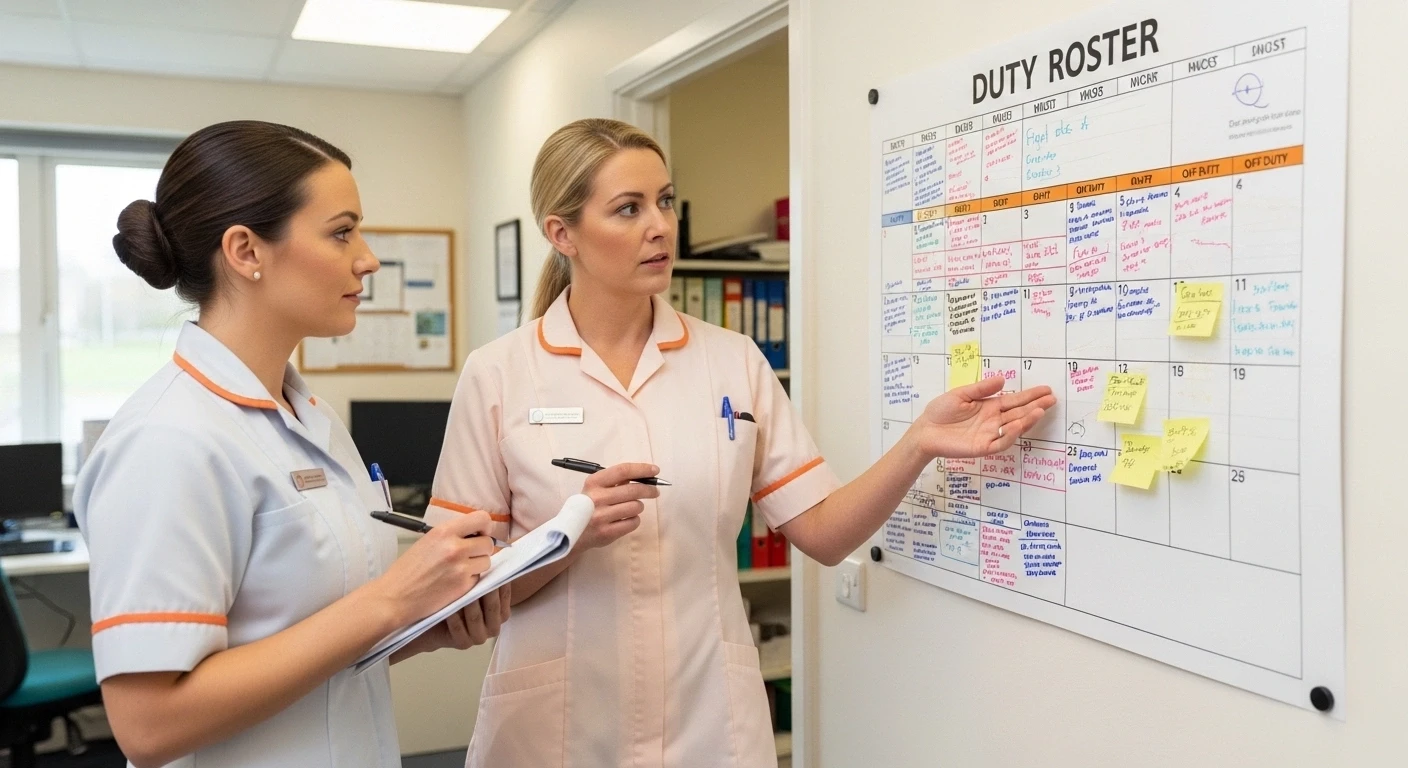
The foundation of Managing On-Call Duties is moving away from the Hero Manager model, where one person handles everything. A fair rota involves:
- The Multi-Tiered Approach: A robust rota doesn't just name one person. It should identify a First Responder (usually a Senior Carer or Deputy) and a Second-Line Lead (the Registered Manager) for significant emergencies only.
- Competency Mapping: Before adding a staff member to the rota, conduct an On-Call Competency Assessment. Do they know how to access the Staff Training Records or emergency contact details for all service users?
- Fairness in Distribution: Ensure the rota accounts for rest days after a heavy on-call shift. If a Deputy Manager handles a crisis at 3 AM, their start time the next morning should be adjusted to remain compliant with the Working Time Regulations.
STEP 2: Define Exactly What Requires Escalation
The most common resource drain is the Non-Emergency Call. When staff call you for things they could solve themselves, it’s usually a sign of a lack of confidence or unclear protocols.
To fix this, you need a written Escalation Matrix. This document should be visible in the office and included in every staff handbook.
- Red Category (Immediate Call): Death of a service user, missing person (safeguarding), fire/flood, or a staffing level that falls below the legal minimum requirement.
- Amber Category (Consultation Needed): A fall where the person is uninjured but requires a neurological observation check, or a family member making a formal verbal complaint.
- Green Category (Log for Morning): Routine sickness for a shift 24 hours away, minor maintenance issues, or general care plan queries.
STEP 3: Create an On-Call Log and Incident Documentation System
If it isn't documented, it didn't happen. In the eyes of a CQC inspector, an on-call system without a log is a major Well-Led risk. Managing On-Call Duties requires a paper (or digital) trail that proves you are responsive and effective.
- The Anatomy of a Good Log: Every entry should include the Time of Call, the Caller, the Nature of the Issue, the Instruction Given, and the Final Outcome.
- Audit for Improvement: Review these logs weekly. If you notice a high volume of calls regarding medication, it may be time to get a Medication Management Refresher Course.
- Legal Protection: In the event of an investigation or safeguarding inquiry, your on-call log is your primary evidence that you took all reasonable steps to ensure safety.
STEP 4: Support Staff Who Take On-Call Responsibilities
Asking a Senior Carer to take the on-call phone can be daunting. To manage this transition, you must provide:
- Shadowing and Dual On-Call: For the first two weeks, have the new on-call lead shadow you. They take the call, they propose the solution, and you sign off on it before they execute.
- Structured Debriefs: After a difficult night, hold a 10-minute Reflective Account session. Ask: What went well? What was the hardest decision? What do we need to change in the protocol?
- Access to Resources: Ensure the person on call has remote access to your Digital Care Planning System so they aren't making decisions in the dark.
STEP 5: Protect Your Own Wellbeing and Sustainability
Registered managers often feel an immense professional guilt that drives them to stay on call even when they are physically and mentally exhausted. However, managing this effectively means recognising:
- Structural Resilience: If you are the only person absorbing out-of-hours responsibility for a large service, this is no longer a management challenge; it is a governance risk.
- Scheduled Off-Grid Time: You must have periods where the on-call phone is physically with someone else and your notifications are silenced. This isn't just for rest; it tests the effectiveness of your Step 2 and Step 4. If the service can't run for 48 hours without your input, the system needs to be redesigned.
- Reflective Practice: Use your own supervision to discuss the emotional weight of on-call duties. If you find yourself in a state of perpetual alertness (waiting for the phone to ring even when off), it is time to enrol for an accredited Leadership and Management course.
Prepared to Build a More Resilient Service?
A registered manager who is exhausted from managing on-call duties is a leader who is at risk of making critical errors. Jake took a step in managing on-calls after realising his professional responsibility to the people in his care:
“We restructured our on-call rota across three senior managers and introduced a clear escalation protocol six months ago. The number of calls I receive out of hours has dropped by over 60%, and the quality of calls I do receive is completely different.” ~ Jake Liam (Registered Manager, West Yorkshire)
Remember, sustainable on-call management isn't a luxury; it is the infrastructure that allows a care business to scale. If you are leading a service, remember that psychological safety is a performance metric
In the eyes of the CQC, true leadership is demonstrated by the systems you build, not the hours of sleep you sacrifice.
Let's help you maintain it!
👉 Invest in leadership and management training
👉 Download free care resources and templates
👉 Join our next webinar with former CQC Inspector, Ed Watkinson