DBS Check is one of the first and most important steps you’ll need to take if you’re aiming to start or continue your career in care. Whether you’re applying for your first care role, moving to a new employer, or updating an existing check, understanding how to apply for this check in 2026 is crucial for staying compliant, protecting service users, and proving your trustworthiness in the care sector.
In the UK, a DBS Check, short for Disclosure and Barring Service Check, ensures that people working with vulnerable adults or children have been properly vetted. It’s not just a bureaucratic step; it’s a legal and safety requirement for anyone delivering care. From uncovering criminal records to verifying eligibility for regulated activity, this protects both staff and the people they support.
A DBS is a background check that helps employers in the care sector ensure staff are suitable to work with vulnerable adults or children. It confirms whether someone has any criminal convictions, cautions, or is barred from working in a regulated activity. This is critical in care because your role directly impacts the safety, well-being, and trust of those you support.
Who Can Apply for a DBS Check?
Disclosure and Barring Service Check is essential; not everyone can apply for every type of check, and knowing the correct route can save time and avoid errors.
An individual cannot apply for a Standard or Enhanced DBS on themselves; it must always be requested by an employer or an organisation.
There are three main types of Disclosure and Barring Service Check in the UK:
Basic DBS Check (Lowest Level)
Individuals can request a Basic Check themselves through the GOV.UK online service. This is commonly used for roles outside of regulated activity or for personal record-keeping. It shows only unspent convictions.
- Who can apply: Anyone aged 16 or over.
- Purpose: Shows unspent convictions and conditional cautions.
- Key Detail: Individuals can apply for this themselves, and there are no specific eligibility requirements for the job role.
Standard DBS Check
For most healthcare and care-related roles, individuals cannot apply directly. Standard and Enhanced checks must be requested by an employer or an umbrella organisation
- Who can apply: Employers on behalf of a candidate. The employer must be based in England or Wales.
- Eligibility: The role must be included in the Exceptions Order to the Rehabilitation of Offenders Act 1974.
- Common Roles: High-security positions, legal professionals, and some financial services roles. Accountants, lawyers, or people working in high-security office environments
Enhanced DBS Check (Highest Level)
The highest level of disclosure. It is designed specifically for all people working in "Regulated Activity.
- Who can apply: Employers on behalf of a candidate.
- Eligibility: The role must be listed in both the Exceptions Order and the Police Act 1997 regulations.
- Common Roles: Those working in "Regulated Activity" with children or vulnerable adults
What makes the Enhanced Check different from the Standard?
While a Standard Check looks purely at a person's official criminal record (convictions and cautions), the Enhanced Check adds two critical safeguarding layers of Local Police Intelligence and the Barred List Check.
Note: It is actually illegal for an employer to request a check that is at a higher level than the role requires. This is why following the official DBS Eligibility Guidance is vital for your business reputation.
Staying compliant with DBS requirements isn’t just about following the law it also protects your professional reputation and ensures you can work across multiple care settings without delays.

Step-by-Step Guide to Applying for a DBS Check
Applying for a Disclosure and Barring Service Check can feel daunting, but breaking it down step by step makes the process manageable and ensures you’re fully compliant before starting any care role. There are several ways to apply, these include:
- Self-Service
- Employer-Led
Self Service – Basic DBS
A basic Disclosure and Barring Service Check is the simplest type and can be requested directly by an individual through GOV.UK’s online service
This check shows any unspent convictions and conditional cautions, making it suitable for volunteer roles or positions outside regulated care activity.
Steps to apply:
- Visit GOV.UK: Go to the official Request a basic DBS check page.
- Verify Identity: Use the "GOV.UK One Login" to verify your identity digitally.
- Pay the Fee: The current cost is £21.50 (as of 2026).
- Receive Certificate: The certificate is posted to your home address..
Many care workers use this route if they are between roles or volunteering while waiting for their employer to process a Standard or Enhanced check.
Employer-Led - Standard or Enhanced DBS
For regulated care roles, Standard and Enhanced DBS must be applied for through your employer. The employer application process includes the following:
Employer application process:
- Role Confirmation: Your employer confirms you meet the "Regulated Activity" criteria.
- ID Verification: You must show original documents (no copies) to your employer or an umbrella body.
- Submission: The employer submits the application via the DBS online portal.
- The Result: The physical certificate is sent only to you. You must then show this to your employer to complete your onboarding.
Required Documents Needed to Apply for DBS
Regardless of which type of check, you will need to provide proof of identity. Typical documents include:
- Primary Identity: Current Passport or UK Driving Licence.
- Address Proof: Utility bill (dated within 3 months) or Council Tax statement (dated within 12 months).
- National Insurance Number: Essential for the background search.
Pro-Tip: Double-check the document list your employer provides, as the DBS identity validation rules are strict. Mistakes here are the most common cause of delays.
How Long Does it Take and What Does It Cost?
Understanding the timelines and costs of a DBS is essential for anyone preparing to work in care. Planning ahead prevents delays in starting your new role and ensures CQC compliance with regulations.
Disclosure and Barring Service Check Timelines
The processing time depends on the type and the method of application:
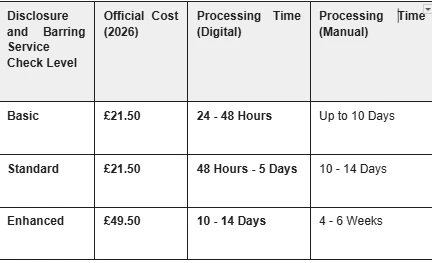
Note on Admin Fees: While the government fees are as above, most employers use an "Umbrella Body" which adds an administration fee (usually £5–£15). Total costs may vary based on these admin fees.
Note: Delays can occur if issues are verifying your identity, missing documentation, or discrepancies in your personal history. Using accurate documents and completing identity verification promptly helps reduce delays.

What Happens After Receiving Your DBS Check?
Receiving your Disclosure and Barring Service Check is just one part of the process. Knowing what to do next ensures you stay compliant, ready for work, and able to move between care roles efficiently.
A Disclosure and Barring Service Check Certificate
Once your DBS is complete, you’ll receive a certificate detailing your criminal record information (if any). For Basic checks, this shows unspent convictions only.
Standard and Enhanced checks include spent convictions, cautions, reprimands, and warnings, with Enhanced also noting any relevant information held by local police.
It’s essential to read your certificate carefully and report any inaccuracies immediately to the DBS to avoid complications with future employers.
Convenience to Register with the DBS Update Service
The DBS Update Service allows you to keep your certificate up to date online. The Key benefits include the following:
- Employers can check your certificate digitally, saving time.
- You can transfer your certificate between roles, avoiding repeated applications.
- An annual subscription is £13, which is significantly cheaper than multiple new applications.
For care staff who plan to move between employers or take on multiple roles, registering is highly recommended.
Luxury to Share Your Certificate with Employers
You are responsible for showing your DBS certificate to employers when required. Most care providers will request it during recruitment or before starting work.
Some employers may also verify your status through the Update Service instead of asking for a physical copy.
No Expiry DBS Certificate
Proactively managing your DBS certificate signals professionalism, compliance, and readiness to employers, vital qualities in the competitive care sector.
DBS certificates do not expire, but employers may require a recent check to comply with regulations, demonstrating ongoing suitability for roles in adult or child care services.
Ready to Make Sure Your DBS Check Is in Place?
Before stepping into any role in the care sector, having a valid DBS is non-negotiable. It’s more than just a certificate; it’s proof that you’re trustworthy, compliant, and ready to provide quality and safe care to vulnerable adults or children, and this is where your business shines.
In the care sector, a DBS check is just the entry requirement. Once the staff member is cleared, the employer's next legal responsibility is Training and Compliance, and your staff must be equipped with the latest skills and mandatory training, accredited Care Certificate to advanced Diplomas, because a clean DBS certificate is only the beginning.