Oliver McGowan Training isn't just a training requirement; it’s a fundamental shift in how we approach care. Named after a young man whose avoidable death highlighted catastrophic gaps in clinical understanding, this Training on Learning Disability and Autism is now a statutory requirement under the Health and Care Act 2022.
If you are a Registered Manager in 2026, you are likely staring at a training matrix that looks like a sea of red. The biggest culprit? The Oliver McGowan Training.
Since 2022, it has been a legal requirement for all CQC-registered providers to ensure their staff receive training appropriate to their role. However, from September 2025, the Oliver McGowan Code of Practice became the benchmark.
But here is the reality check: The "honeymoon period" for awareness is over. The CQC is no longer just asking if your staff have watched a video. They are looking for evidence of Tier 2 competency, lived-experience co-delivery, and tangible changes in resident outcomes.
In the UK, health and social care training is not just about compliance. It is about safety, dignity, and making sure people are truly understood. This training sits at the centre of this shift. Introduced under the UK Government’s mandatory learning disability and autism training guidance, it addresses long-standing gaps in how professionals support people with a learning disability and autistic people, especially in moments where misunderstanding can lead to harm.
What is Oliver McGowan Training ?
Before we get into the "how," let’s clear up the "what." The Oliver McGowan Mandatory Training on Learning Disability and Autism is the government’s preferred and recommended training to help providers meet the requirements of the Health and Care Act 2022.
The training is named after Oliver McGowan, a young man whose avoidable death in a hospital setting highlighted a catastrophic lack of understanding among healthcare staff regarding autism and learning disabilities. His mother, Paula McGowan OBE, campaigned tirelessly to ensure that no other family would suffer a similar tragedy due to "professional ignorance."
The UK Government responded by introducing a statutory framework, now embedded in the Oliver McGowan Code of Practice, to ensure consistent standards and expectations across the sector.
This is a structured programme designed to equip health and social care professionals with the knowledge and skills needed to support people with a learning disability and autistic people safely and respectfully. Its purpose is to close the gap in understanding, reduce preventable harm, and ensure care is truly person-centred. The training is tiered based on role and responsibility, making it suitable for both frontline staff and senior managers.

Why Oliver McGowan Training Matters in UK Care
Training alone isn’t enough, understanding why Oliver McGowan training matters is crucial for improving outcomes and keeping services safe. Care staff and managers who complete this training gain insight into the challenges faced by people with learning disabilities and autistic individuals, including communication differences, sensory sensitivities, and how health inequalities can affect care.
The importance of this training is also reflected in regulatory expectations. The Care Quality Commission (CQC) explicitly considers staff competence and training when inspecting services, looking for evidence that teams can provide safe, personalised, and compassionate care. By completing this training, providers demonstrate that they are actively addressing gaps in knowledge that could otherwise lead to avoidable harm or substandard care.
For care providers, managers, and frontline staff, this training is more than another mandatory requirement. It is a practical framework that helps teams recognise individual needs, adapt care approaches, and deliver services that are respectful, inclusive, and person-centred. As expectations from regulators and service users continue to rise, understanding why this training matters has become essential for anyone working in the UK care sector.
The reality is that it is for everyone.
If you work in a CQC-regulated setting, the law (Health and Care Act 2022) says every single person from the Registered Manager to the part-time gardener must have training "appropriate to their role."
Who needs the Oliver McGowan Training
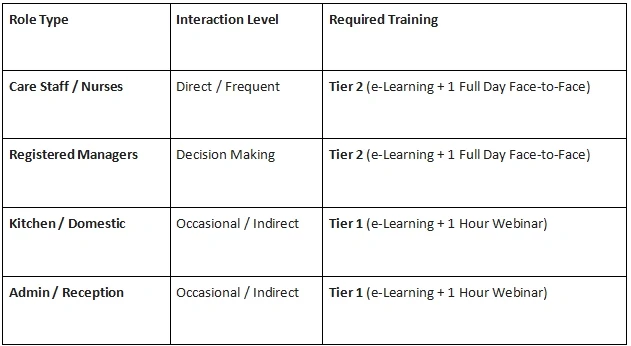
Not all staff in UK care settings require the same level of training. The Oliver McGowan training framework is tiered so organisations can assign the right level to each staff member, ensuring relevance and practical impact. The training applies across a range of roles, from frontline carers to managers, and even non-clinical staff who interact with people with learning disabilities or autism.
● Frontline Clinical Staff
Staff directly providing care, such as nurses, care assistants, or support workers, must complete the appropriate training level (Level 2 for most). This ensures they understand the nuances of delivering safe, person-centred care, and can respond effectively to emergencies or communication challenges.
● Non-Clinical Staff
Roles such as receptionists, administrative staff, or transport coordinators may not deliver care directly but still interact with people who have learning disabilities or autism. Level 1 training equips them with awareness and basic understanding, enabling them to respond respectfully and appropriately.
● Managers and Leaders
Supervisors, team leads, and senior managers are responsible for embedding training into practice. Understanding the Oliver McGowan framework helps them monitor compliance, support staff, and ensure services meet CQC standards.
● Volunteers and Temporary Staff
Even volunteers or agency staff with occasional contact must receive at least basic training relevant to their role. Organisations are accountable for ensuring all personnel understand how to provide safe, inclusive care.
Levels/Tiers of the Oliver McGowan Training
The training tiers is divided into two tiers to ensure each staff member receives training appropriate to their role and level of contact with people with learning disabilities or autism. Understanding the difference is crucial for compliance and effective care delivery.
Level 1: Awareness Training
Level 1 is primarily for staff who need a general understanding of learning disabilities and autism but are not delivering direct care. This includes:
● Administrative staff
● Receptionists
● Support staff with occasional service user contact
Key components of Level 1:
● Understanding learning disabilities and autism basics
● Recognising communication differences
● Awareness of reasonable adjustments
● Introduction to safeguarding principles
Level 1 training is typically delivered via online modules, supplemented with discussion or reflection activities to encourage practical application in the workplace.
Level 2: In-Depth, Role-Specific Training
Level 2 is designed for staff who deliver care directly or manage care delivery. This includes:
● Nurses and care assistants
● Team leaders and supervisors
● Agency or temporary staff with direct client contact
Key components of Level 2:
● Scenario-based learning and practical case studies
● Communication strategies for people with autism and learning disabilities
● Identifying and managing risks
● Implementing reasonable adjustments
● Escalation procedures for safeguarding and emergencies
Level 2 combines online learning with face-to-face or live virtual workshops, emphasising real-world application. Completion of Level 2 ensures staff can confidently support individuals, reduce avoidable harm, and meet CQC inspection standards.
Choosing the Right Level
Organisations should assess staff responsibilities and contact level with service users to assign the correct training tier. Managers must regularly review and refresh training to reflect evolving practice standards and regulatory expectations.
How Oliver McGowan Training Supports CQC Compliance
For UK care providers, completing this training isn’t just about meeting a statutory requirement it directly supports compliance with the Care Quality Commission (CQC) standards. Inspectors assess whether staff are trained appropriately to meet the needs of people with learning disabilities or autism. Training is evidence that the organisation is taking proactive steps to safeguard service users and deliver high-quality, person-centred care.
Key ways Oliver McGowan training supports compliance include:
● Staff competence evidence: Level 1 and Level 2 completion records show that teams understand relevant care needs.
● Regulation alignment: The training links directly to CQC regulations such as Regulation 18 (staff training and supervision) and Regulation 9 (person-centred care).
● Risk reduction: Staff trained under the Oliver McGowan framework can identify potential hazards, prevent incidents, and respond appropriately.
● Continuous improvement: Training encourages reflective practice and embeds learning into daily routines, demonstrating ongoing commitment to quality care.
Organisations can integrate training outcomes into supervision notes, staff appraisals, and organisational policies to strengthen inspection evidence..
Completing the training not only demonstrates regulatory compliance but also fosters a culture of understanding, respect, and safe care within organisations, which CQC inspectors recognise and reward.
The good funding news is that the Adult Social Care Learning and Development Support Scheme (LDSS) has a specific "pot" for this training. In 2026, the reimbursement rates are typically:
● Tier 1: Up to £25 per person.
● Tier 2: Up to £90 per person.

Learning Outcomes of the Oliver McGowan Training
Completing this training equips care professionals with the knowledge, skills, and confidence to support people with learning disabilities and autistic individuals safely, inclusively, and effectively. Beyond compliance, the real value comes from applying what you learn in practice.
By the end of the training, staff can:
● Understand invisible disabilities: Recognise sensory sensitivities, communication differences, and hidden health challenges.
● Communicate effectively: Use clear, tailored approaches, including non-verbal cues or alternative communication methods.
● Make reasonable adjustments: Adapt care delivery, procedures, and environment to individual needs.
● Safeguard effectively: Identify abuse or neglect and act promptly following legal and organisational protocols.
● Deliver person-centred care: Ensure service users’ preferences, needs, and rights are central to care decisions.
● Apply practical scenarios: Handle real-world situations safely and confidently.
These outcomes ensure staff are not only compliant but able to improve care quality and service user experience.
Ready to Turn your Awareness to Action
Meeting the standards of the Oliver McGowan Mandatory Training is about more than awareness. It’s about equipping yourself and your team with the right knowledge to support autistic people and those with a learning disability safely, confidently, and with dignity.
If you’re ready to build on what you’ve learned, you can enroll for accredited autism-course, strengthen your practice, and explore other discounted training options currently available.