Effective Communication in Autism Care is not one-size-fits-all. In care settings, this truth carries particular weight when supporting autistic service users, many of whom experience the world, including language, interaction, and sensory input, in ways that differ significantly from neurotypical expectations.
According to the National Autistic Society, more than one in 100 people are autistic, and there are at least 700,000 autistic adults and children in the UK. Autistic people are significantly more likely to experience anxiety, mental health difficulties, and social isolation when their communication needs are not understood or met.
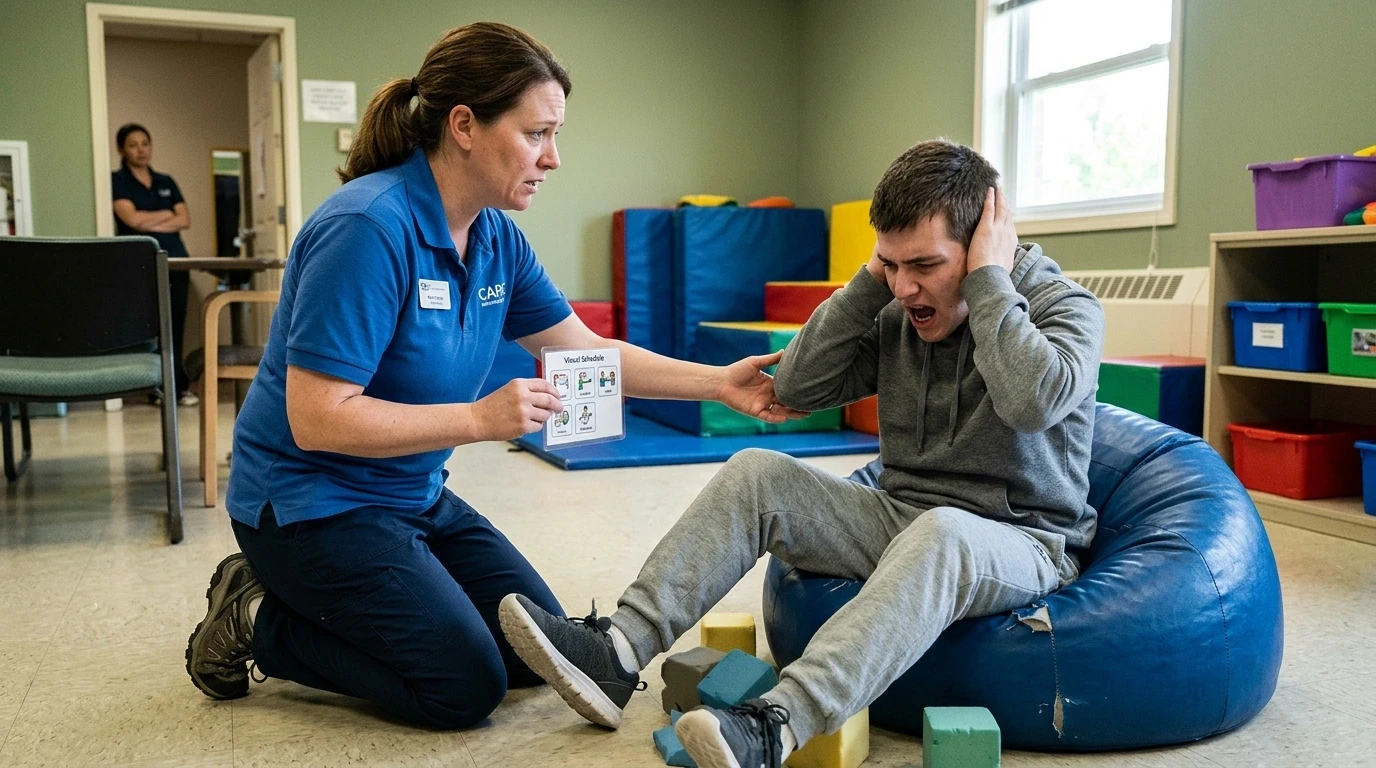
In a care environment, unmet communication needs can manifest as withdrawal, distress, or behaviours that care teams may misread as challenging.
Joanna Belle, a Senior Carer, reflects that the reality of this challenge comes up regularly:
"I have a service user who rarely speaks and often looks away during conversation. For a long time, I was unsure whether I was reaching her at all." ~ Brenda Farell (Senior Support Worker, Leeds)
Understanding and applying the right communication strategies in autism care is not a specialist skill reserved for speech-language therapists. It is a core competency that every member of a care team can and should develop.
This guide covers what autism-informed communication looks like in practice, why it matters for CQC compliance, and a step-by-step approach to embedding it into your care setting.
What Counts as Effective Communication Strategies in Autism Care?
Before exploring the steps to developing communication strategies in autism care, it is worth clarifying what the term covers in a care context. It goes well beyond simply speaking slowly or using simple words.
Autism-informed communication includes:
• Adjusting the pace, tone, and structure of verbal interaction
• Recognising and responding appropriately to non-verbal communication, including gesture, body language, and behaviour as communication
• Using visual supports, including objects of reference, picture schedules, communication boards, and PECS (Picture Exchange Communication System)
• Implementing AAC (Augmentative and Alternative Communication) tools, including speech-generating devices and apps
• Understanding the role of sensory sensitivities in how a person can engage with communication
• Reducing sensory and environmental barriers such as background noise, bright lighting, or unpredictable settings
• Adapting written communication to be accessible, including the use of easy-read formats
It also means understanding that silence, repetitive questions, and a preference for routine are not obstacles to communication but often the way a person is communicating. Staff who interpret these correctly can respond in ways that support rather than escalate the situation.
Why Communication Strategies in Autism Care Matter
Autism is a spectrum, and communication differences vary widely. Not every autistic person has the same communication profile. Some autistic people are highly verbal but struggle with pragmatic or social language. Others may use little or no spoken language. Person-centred communication planning means treating each individual as the authority on how they communicate best.
The Care Quality Commission expects providers to demonstrate that care is person-centred and tailored to individual needs. For autistic service users, that means meeting them where they are communicatively, not requiring them to adapt to systems that were not designed for them.
The Autism Act 2009 was the first piece of disability-specific legislation in England and led to the development of statutory guidance under the National Strategy for Autistic Children, Young People and Adults: 2021 to 2026. This strategy is clear that autistic people should receive care and support that accounts for their sensory and communication needs.
Care workers and registered managers who take the time to understand communication strategies in autism care and adapt their communication approach do not just improve the experience of the people in their care. They reduce anxiety, minimise misunderstanding, and build the kind of trust that makes high-quality care possible in practice.
Steps to Develop Communication Strategies in Autism Care
Effective Communication Strategies in Autism Care offer a practical framework for building and embedding autism-informed communication across your service. The following steps are essential in providing person-centred care to autism service users:
Step 1: Build an Individual Communication Profile for Each Autistic Service User
No two autistic people communicate in the same way. The first step is to carry out or review a detailed communication assessment for each autistic service user in your care. This should be developed with input from the person themselves, where possible, alongside family members, advocates, or speech and language therapists.
The profile should capture:
• Preferred communication methods (verbal, written, symbol-based, or AAC)
• Communication triggers that cause distress or shutdown
• Sensory preferences that affect communication, such as noise tolerance and eye contact
• Processing time needed before responding
• Signs that the person is communicating through behaviour
This profile must live in the care plan and be regularly reviewed as the person's needs evolve.
Step 2: Train All Staff in Autism-Aware Communication
Training is not a one-off event. It is the foundation of a communication-competent team. All staff, including support workers, agency staff, and managers, should undergo training on the Level 3 Certificate in Understanding Autism.
This training covers the principles of autism in supporting autistic individuals with a positive, person-centred approach, how to manage their transitions, autism-informed communication techniques and safeguarding responsibilities that protect them.
Step 3: Implement Visual Supports Across the Care Environment
Visual supports are one of the most widely researched and consistently effective tools in autism communication. They reduce reliance on verbal processing, support predictability, and give autistic service users a way to navigate their day, make choices, and express needs independently.
Effective visual supports in a care setting include:
• Daily visual schedules displayed in the service user's room or shared space
• Choice boards for meals, activities, and personal care
• Now/Next boards to support transitions
• Objects of reference for individuals who are pre-symbolic communicators
• Visual cues around the building to indicate spaces and activities
All visual supports should be individualised. Generic picture sets are a starting point, but they work best when tailored to what the person actually recognises and responds to.
Step 4: Allow Adequate Processing Time
Many autistic people need significantly more time to process verbal information before they can respond. Rushing a response, repeating the question too quickly, or filling silence with additional words can increase confusion and anxiety.
The practical guidance: say what you need to say once, clearly and calmly, then wait. Depending on the individual, processing time might be anywhere from five seconds to several minutes. Learn the person's pace through observation and documentation, and share this knowledge across the whole team.
Step 5: Reduce Environmental Barriers to Communication
Sensory overload can shut down communication entirely. Care environments that are noisy, unpredictably busy, or visually cluttered can make it significantly harder for autistic service users to engage. For many autistic people, sensory input is processed differently and can become physically overwhelming.
Steps to reduce environmental barriers include:
• Conducting care conversations in quieter spaces where possible
• Reducing background noise during key communication moments
• Dimming bright or flickering lighting if it causes distress
• Allowing the service user to choose the environment in which they prefer to communicate
Step 6: Implement AAC Tools Where Appropriate
Augmentative and Alternative Communication (AAC) refers to any method that supports or supplements speech. For non-speaking or minimally verbal autistic service users, AAC is often the primary means of communication and should be treated with the same seriousness as spoken language.
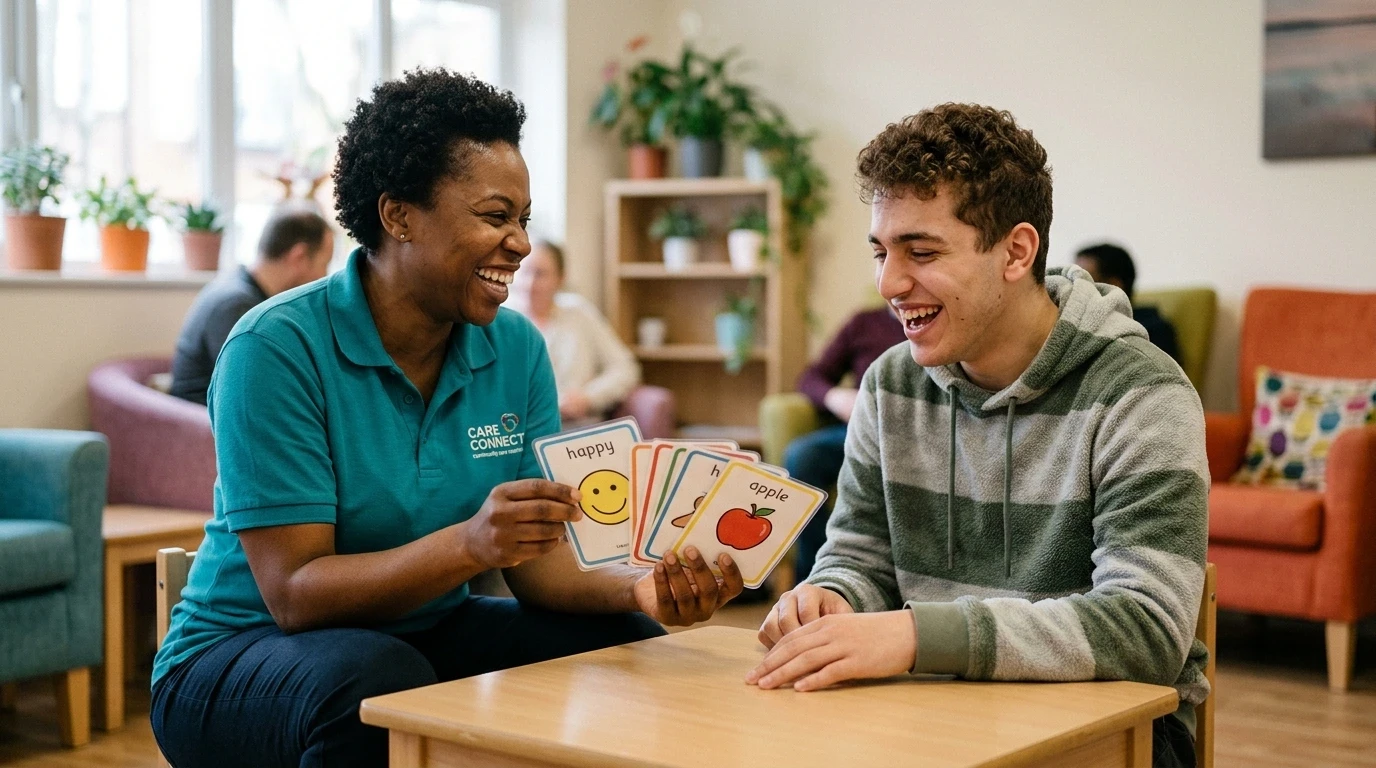
AAC tools range from low-tech picture cards and communication books to high-tech speech-generating devices and tablet-based communication apps. The specific AAC system should be recommended by a speech and language therapist based on the person's individual profile.
Note: Staff have a responsibility to learn how to use the AAC system that a service user relies on.
Step 7: Review and Update Communication Strategies Regularly
Communication needs change. An autistic service user who was non-verbal on admission may develop functional communication over time. A strategy that worked last year may be less effective now. Changes in health, medication, environment, or staffing can all affect how a person communicates.
Build formal communication reviews into the care planning cycle, at a minimum, at every care plan review, and informally at team handovers whenever a significant change is observed.
Build your team's Communication Strategies in Autism Care!
Care teams that make the biggest difference in the lives of autistic service users are not always those with the most resources. They are the teams that listen differently, adjust without judgment, and remain curious about each person's way of being in the world.
A Registered Manager of a supported living service shared this reflection:
"We had a new staff member who was nervous around one of our autistic residents because he rarely responded to questions. We helped her understand that he communicates through routine and movement. When she started observing him differently, she became his most effective support worker within weeks."
Communication strategies in autism care are not extras added to a qualification or pay grade. They are what good care looks like for autistic people.
Communicate Better, Care Better!
👉 Explore Level 3 Autism Care Qualification