Care plans get written every day across adult social care, but not all of them are actually person-centred. Too many still read as if they were copied from a folder marked "template" rather than written about a real individual with their own history, preferences, and goals.
That's a problem, because knowing how to Write A Person-Centred Care Plan isn't just a nice-to-have skill for Registered Managers, Deputy Managers and Care Coordinators. Under Regulation 9 of the Health and Social Care Act 2008 (Regulated Activities) Regulations 2014, care and treatment must be appropriate, meet the person's needs, and reflect their preferences. CQC expects to see this evidenced clearly in the plan itself, not just described in policy.
Get person-centred care plans right, and you'll see better outcomes, more consistent care across shifts, and a much smoother CQC inspection. Get them wrong, and generic, outdated, or task-focused plans quickly become among the most common findings behind a Requires Improvement rating.
In fact, generic care plans copied across different service users are consistently flagged among the top reasons providers fall short of Regulation 9, alongside poor involvement of people and their families in decisions about their own care.
In this guide, we'll walk through exactly what person-centred care plans are, why it matters so much, and a clear, step-by-step process for writing one, whatever your service type.
Whether you're writing your first care plan or reviewing hundreds of existing ones across a service, the same principle applies throughout: the plan should read as though it was written about one specific person, because it was.
Understanding a Person-Centred Care Plan
A person-centred care plan is a written record of how someone's needs will be met, written around who they are as a person, not just what tasks staff need to complete.
Its purpose is simple: to give any member of staff, at any time, a clear picture of who this person is, what they need, and how they want to be supported. That's very different from a generic checklist of tasks.
Every care plan should be unique, because every person is unique. Two people with the same diagnosis or the same care needs can still want completely different things from their support. One person might want help getting to church every Sunday. Another might want quiet mornings and support with a hobby in the afternoon. A person-centred approach captures those individual differences instead of flattening them into a standard routine.
Person-centred planning also means actively promoting independence, not doing everything for someone simply because it's quicker. And it means building the plan around the person's desired outcomes, what they actually want to achieve, rather than only listing their deficits and needs.
Don't Forget
A care plan built only around tasks (wash, dress, feed) misses the point of person-centred care. It should also capture the person's goals, routines, and what a good day looks like to them.
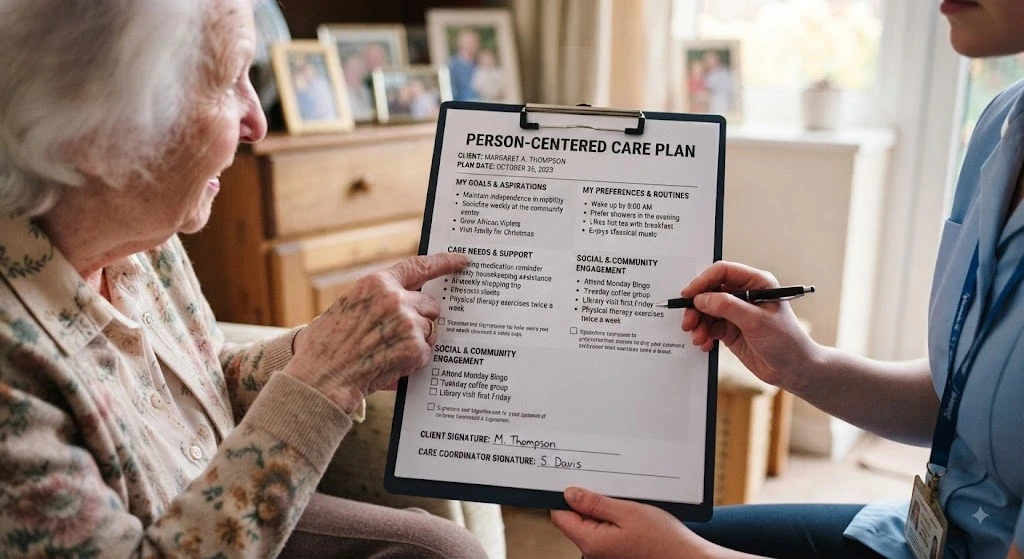
Importance of Person-Centred Care Plans
Person-centred care plans aren't just a compliance requirement. When done well, they make a genuine difference to the quality of someone's day-to-day life and to how confidently your team can support them.
Here's what good person-centred care planning delivers:
- Better outcomes. When care is built around what someone actually wants, they're more likely to stay engaged, healthier and more independent.
- Consistent care. A detailed, individual plan means any member of staff, including new starters or agency workers, can pick it up and support the person correctly.
- Improved communication. A well-written plan bridges the gap between the person, their family, and every professional involved in their care.
- Stronger CQC compliance. Regulation 9 sits at the heart of the Responsive and Caring key questions, and a genuinely person-centred plan is your clearest evidence of meeting it.
- Confident, capable staff. When a plan is specific and practical, staff spend less time guessing and more time delivering the right support, first time.
Best Practice
Ask yourself: if this plan applied to someone else entirely, would anyone notice? If the answer is no, it's not personalised enough yet.
Steps to Writing a Person-Centred Care Plan
A Person-Centred Care Plan isn't just what you tick off a form. Writing a strong, person-centred care plan isn't complicated, but it does need a clear process. Here's how to approach it step by step.
Step 1: Get to Know the Person
Before you write a single line of the plan, you need to understand the person behind it.
Take time to explore:
- Their personal history, including their career, family life and significant life events.
- Preferences around daily routines, food, sleep and personal care.
- How they communicate, including any additional communication needs.
- Their goals, both short-term and long-term.
- Cultural and religious needs that shape how they want to be supported.
- Who's important to them, and how they'd like family involved.
Getting to know someone properly often takes several conversations, at different times and in different moods, plus input from family members or previous care providers who already know the person well. The more effort you put into this stage, the less generic guesswork you'll need to fill in later.
Step 2: Carry Out a Thorough Assessment
Once you understand the person, you need a clear picture of their needs. A thorough assessment should cover:
- Physical health, including any long-term conditions.
- Mental health and emotional wellbeing.
- Mobility and any equipment or support required to move safely.
- Nutrition and hydration needs, including any texture-modified diet requirements.
- Medication, including how it's managed and any risks involved.
- Personal care needs and preferences.
- Risks that need to be understood and managed.
- Strengths and abilities, not just areas of need.
- Opportunities to promote independence.
Don't Forget
An assessment that only records problems gives you half the picture. Always capture what the person can do and enjoys doing, not only what they need help with.
Step 3: Write Clear and Personalised Care Information
How you write the plan matters just as much as what you put in it. Use plain English, be specific, and write the plan as if you were describing this one individual to someone who has never met them.
Avoid vague, generic instructions. Compare these two examples:
Poor example: Assist with personal care as needed.
Better example:
- David prefers to shower in the morning before breakfast.
- He likes privacy but needs standby support to step in and out of the shower safely.
- He prefers his own shaving kit and likes to shave himself where possible.
The second version gives staff a genuinely useful, individual instruction. It reflects preferences, promotes independence, and reduces the risk of two different carers doing the same task in two completely different ways.
Keep the tone consistent and specific throughout, and always link tasks back to the person's preferences, strengths and desired outcomes, not just the action itself.
Step 4: Involve the Person and Those Important to Them
A care plan shouldn't be written about someone; it should be written with them.
Involvement means offering real choice and genuine collaboration, not simply informing the person what's already been decided. Where family members or advocates are involved, include them meaningfully, and always work within the principles of the Mental Capacity Act, making sure any best-interest decisions are properly recorded when someone lacks capacity to be involved directly.
Useful questions to ask during care planning conversations include:
- What does a good day look like for you?
- Is there anything about your current routine you'd like to change?
- Who would you like us to keep informed about your care?
- Are there things you used to enjoy that you'd like support to do again?
Step 5: Review and Update the Care Plan Regularly
A care plan is a working document, not a one-off form. It should be reviewed at scheduled intervals, and updated immediately when something changes.
Reviews should always take place after:
- A scheduled review date, as agreed with the person.
- A change in health, mobility or mental capacity.
- A change in medication.
- An incident, fall, or hospital admission.
- New observations from staff about the person's changing needs.
- Feedback from the person or their family.
Common Mistakes to Avoid When Writing Person-Centred Care Plans
Even experienced teams can fall into habits that quietly undermine person-centred care planning.
Here are the common mistakes you should watch out for when writing person-centred care plans:
- Generic wording that could apply to almost anyone.
- Copying old care plans instead of starting from a fresh assessment.
- Not involving the person in decisions about their own care.
- Outdated information that no longer reflects the person's current needs.
- Focusing only on needs, with no mention of strengths, preferences or goals.
- Too much unnecessary detail that buries the practical information staff actually need.
Do This!
Before your next CQC Inspection, pick five care plans at random and ask a staff member, who wasn't involved in writing them, to talk you through the person. If they can't, your plans may not be as person-centred as they look on paper.

Improve Your Care Planning with Care Wizard
A plan can use all the right language- person-centred, choice, independence and still fail to show any real evidence that the person shaped it.
Remember, person-centred care planning is one of the clearest ways to demonstrate quality, compliance and genuine care in your service, and it's worth getting right.
Explore our related CQC-Compliant Guides and Courses on
👉 7 Steps to Conducting a Successful Needs Assessment in Care
👉 Invest in Care Qualification Courses