Most of the anxiety around what happens after a CQC inspection is spent on the day itself, the walk-throughs, the questions, the records being pulled at short notice. But what happens after a CQC inspection is arguably just as important, and it's the part registered managers are least prepared for, mostly because nobody ever walks them through it properly.
The inspectors leave.
The paperwork is packed away.
Your team finally breathes again.
Then the waiting begins.
Many registered managers assume the hard part is over. In reality, some of the most important stages of the CQC report process are only just beginning. From reviewing evidence and preparing the draft report to completing a factual accuracy check and responding to your CQC inspection outcome, several steps can influence what happens after a CQC inspection, and we'll be discussing these steps shortly
Understanding what happens after a CQC inspection isn't just useful background knowledge. It helps you prepare for the next stage, respond professionally if something is incorrect, and use the inspection findings to strengthen your service.
If you've read our guide on How to Achieve an Outstanding CQC Rating, you'll know that CQC inspection readiness is an ongoing process rather than a one-off event. The same principle applies after CQC inspectors leave. Good providers continue reviewing performance, supporting their teams, and strengthening governance regardless of the outcome.
This guide breaks down exactly what happens after a CQC inspection, how ratings get decided, what your options are if you disagree with the findings, and how to build an improvement plan that actually works.
Let's get started.
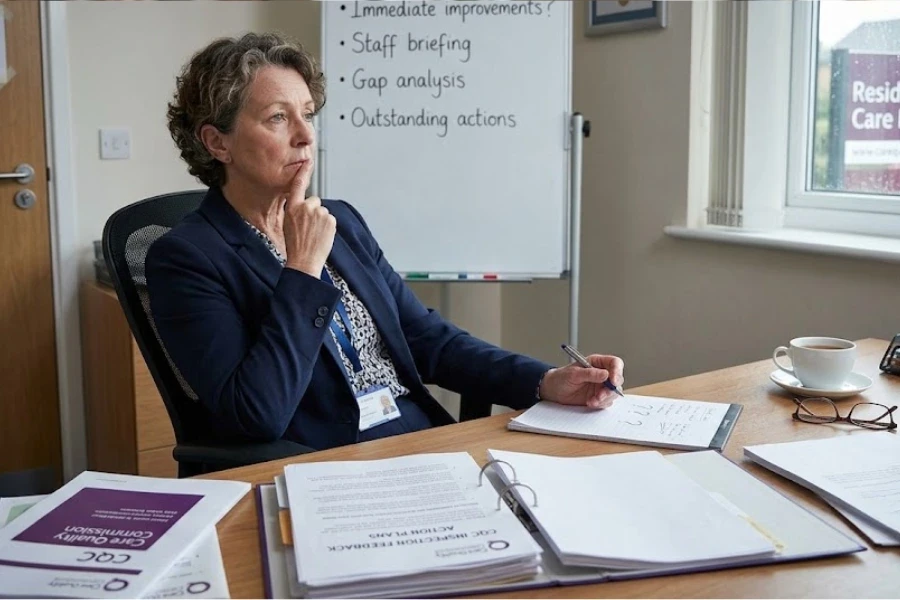
Step 1: CQC Reviews the Evidence After an Inspection
Although the CQC Inspection itself may only last a few hours or a couple of days, the assessment continues long after inspectors leave your service.
What Happens After a CQC Inspection process is reviewing all the evidence collected during the inspection.
This may include:
- Notes taken during observations.
- Interviews with staff.
- Conversations with people receiving care.
- Feedback from relatives.
- Care plans and daily records.
- Medication documentation.
- Governance records.
- Audit findings.
- Safeguarding information.
- Information CQC already holds about your service.
CQC Inspectors don't rely on one conversation or one document.
Instead, they compare evidence from multiple sources to build an accurate picture of how your service is performing.
For example, if staff describe a positive learning culture, inspectors will usually look for supporting evidence in supervision records, governance meetings, incident investigations, training records, and quality assurance audits.
Likewise, if documentation suggests high standards but observations tell a different story, CQC inspectors will explore those differences before concluding.
This balanced approach helps ensure the final CQC inspection outcome reflects everyday practice rather than isolated incidents.
Don't Forget
CQC Inspectors don't base decisions on one piece of evidence. They consider a wide range of information before agreeing on their findings.
Step 2: CQC prepares the Draft Report
Once CQC inspectors have finished reviewing the evidence, they begin preparing your draft report.
This is one of the most important stages of the CQC report process, as it brings together all the inspection findings into a structured report explaining how your service performed.
The report usually includes:
- The scope of the inspection.
- Evidence gathered during the visit.
- Strengths identified by inspectors.
- Areas requiring improvement.
- Findings against CQC's quality statements.
- Your overall CQC ratings.
- Any recommendations or warning notices, where applicable.
Many registered managers make the mistake of skipping straight to the overall rating.
That's understandable.
But it's also where many opportunities for improvement are missed.
The narrative sections often explain exactly why CQC Inspectors reached their conclusions and what evidence influenced their decisions.
Reading the report carefully gives you valuable insight into your service's strengths, weaknesses, and priorities for quality improvement.
Step 3: Completion of Factual Accuracy Check
Before your inspection report is published, you may be invited to complete a factual accuracy check.
This is not an opportunity to challenge CQC's professional judgement simply because you disagree with your rating. Instead, it allows you to identify factual errors that could affect the accuracy of the report.
Examples include:
- Incorrect dates.
- Inaccurate staff numbers.
- References to the wrong location.
- Missing evidence shared during the inspection.
- Factually incorrect statements.
Your provider response should always be supported by evidence rather than opinion.
If you believe something is inaccurate, explain exactly why and include any documentation that supports your comments.
Keeping your response factual, concise, and professional gives you the best chance of having genuine errors corrected before publication.
Compliance Reminder
A factual accuracy check is about correcting facts, not negotiating your rating. Focus on evidence, not emotions.
Step 4: CQC Gives Ratings and Inspection Outcome
Once the factual accuracy process has been completed, CQC finalises your inspection report and confirms your CQC inspection outcome.
This is the stage most providers have been waiting for.
While the overall rating often receives the most attention, it's important to remember that the report itself provides far more valuable information than a single word.
Inspectors award one of four CQC ratings:
Outstanding
Services that consistently exceed expectations and demonstrate exceptional leadership, innovation, and high-quality care.
Good
Services that consistently meet the standards people should expect. Although this is the rating most providers achieve, it doesn't necessarily mean there are no recommendations for improvement.
Requires Improvement
One or more areas have fallen below the expected standard. Providers are expected to address the issues identified, and in many cases, CQC will carry out a reinspection to review the progress made.
Inadequate
This is the most serious inspection outcome. Depending on the findings, CQC may take enforcement action, issue a warning notice, impose conditions on registration, or take other regulatory action to protect people using the service.
It's natural to focus on the rating itself.
However, experienced registered managers spend just as much time reviewing the inspection findings behind the rating.
What Happens After a CQC Inspection explains what findings CQC Inspectors observed, what influenced their decision, and what improvements they expect to see next.
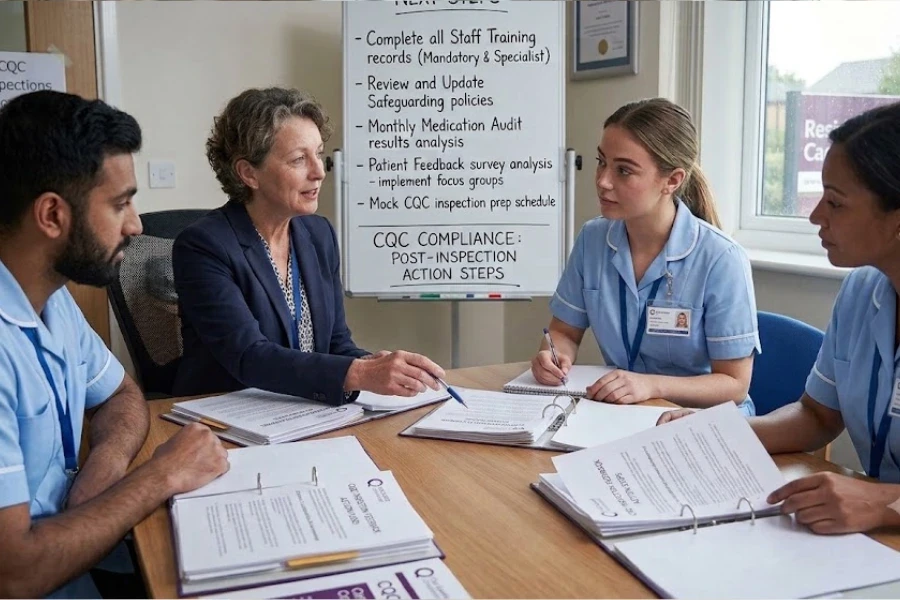
Step 5: Create a CQC Action Plan for Continuous Improvement
The ideal next step after receiving your CQC Rating is to create an action plan for improvement.
The most successful care providers don't wait for their next inspection before making changes. They begin right after the inspection.
Instead, they review the inspection findings, agree on priorities, and develop a clear CQC action plan that supports long-term continuous improvement.
An effective action plan should include:
- Every issue identified during the inspection.
- The action taken or planned.
- Who is responsible for completing each action.
- Realistic completion dates.
- How progress will be monitored.
- The evidence that will demonstrate the improvement has been achieved.
For example, if inspectors identified gaps in medication audits, your action plan might include introducing monthly audit reviews, refresher training for staff, competency assessments, and regular governance meetings to monitor compliance.
Breaking improvements into manageable actions makes them easier to implement and helps demonstrate effective leadership.
- Remember, improvement plans shouldn't disappear into a drawer once they're written.
- Review them regularly.
- Update them as actions are completed.
- Share progress with your team.
The more visible your improvement plan becomes, the stronger your culture of quality improvement will be.
Don't wait for the final report to begin making changes. If CQC Inspectors highlighted an issue during the visit, acting immediately demonstrates proactive leadership and a genuine commitment to improving the quality of care.
Common Mistakes to Avoid After a CQC Inspection
The inspection may be over, but What Happens After a CQC Inspection can make your next inspection much harder or easier. A successful inspection isn't defined by the day inspectors arrive. It's defined by everything you do afterwards to keep improving your service.
Some of the most common mistakes include:
- Focusing only on the overall rating instead of the inspection findings.
- Ignoring recommendations because there were no regulatory breaches.
- Completing an action plan but never reviewing progress.
- Failing to involve staff in service improvements.
- Waiting until the next inspection to update governance systems.
- Treating quality improvement as a one-off project rather than an ongoing process.
Even providers that receive a Good rating should continue reviewing their service regularly.
Strong governance isn't about reacting to inspections. It's about building systems that consistently deliver safe, effective, caring, responsive, and well-led care.
What Happens After a CQC Inspection must be used as a learning opportunity. The services that improve the most aren't always those with the highest ratings; they're the ones that act on feedback and embed improvements into everyday practice.
Turn Your CQC Inspection Results into Better Care
A CQC inspection doesn't end when inspectors leave your service and the inspection report isn't simply a record of what happened on one particular day.
It's a roadmap for improving leadership, governance, compliance, and the quality of care you provide.
If you're preparing for your next inspection, explore our related guides:
👉 How to Achieve an Outstanding CQC Rating
👉 Download our free CQC templates, compliance resources, and practical guides.
👉 Explore recognised adult social care qualifications
👉 Advertise care vacancies and get qualified care professionals.